
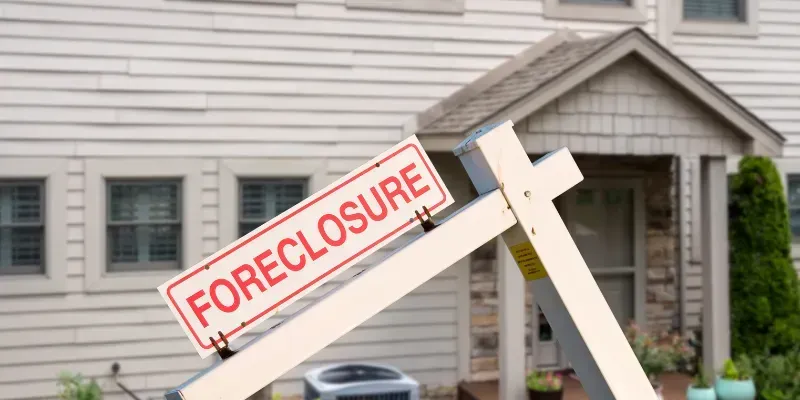
Step-by-Step Guide: How to Sell Your House Before Foreclosure
Can you sell your house before foreclosure? Yes you can, and in majority of the cases, you absolutely should. As long as the foreclosure process hasn't concluded and a sale hasn't been finalized by the lender, you retain the legal right to sell your home. Even with an active mortgage and missed payments on your record, you can sell, pay off what you owe, and walk away without a foreclosure permanently damaging your credit. But timing is everything. The sooner you act, the more options you have.
What Foreclosure Actually Looks Like in Nebraska
(And Why You Have More Time Than You Think)
Nebraska uses a court-supervised foreclosure process, which means lenders have to go through the legal system before taking your home. According to the Consumer Financial Protection Bureau (CFPB), federal law generally requires mortgage servicers to wait until a borrower is more than 120 days delinquent before initiating foreclosure, giving you a meaningful window to act.
In Nebraska specifically, the foreclosure timeline from first missed payment to auction typically runs between 5 and 12 months, sometimes longer. That's not a green light to stall, it's a window that closes fast once attorneys get involved. But it does mean that if you're reading this right now, you likely still have options under the Nebraska Foreclosure Protection Act.
Here's the hard truth most people don't hear: a completed foreclosure stays on your credit report for seven years and can drop your score by 100 or more points. Selling before foreclosure, even at a loss, is almost always the financially smarter move.
Can You Sell a House With a Mortgage?
Here's How It Works
One of the most common questions we hear is: Can you sell a house with a mortgage? The short answer is yes, and it happens every single day across the country.
When you sell a home that still has a mortgage, the proceeds from the sale go toward paying off your outstanding loan balance first, including any interest, fees, and penalties that have accumulated. If there's money left after paying the lender, you keep it. If there isn't, that's where things get more complicated (we'll cover that below).
What you cannot do is pocket the sale price and ignore the mortgage. The lender holds a lien on your property, which means they have a legal claim to funds from any sale. A title company or closing attorney handles this automatically during the closing process.
Step 1: Find Out Exactly Where You Stand Financially
Before you do anything else, get a clear picture of your numbers. You need to know:
Your payoff amount Call your mortgage servicer and ask for a formal payoff statement. This is the exact amount needed to satisfy the loan, including accrued interest and any late fees.
Your home's current market value - Get a comparative market analysis (CMA) from a local real estate agent or request a cash offer from a home buying company.
The gap (or surplus) - Subtract the payoff amount from the estimated sale price. This tells you whether a traditional sale covers your debt or whether you may need a short sale.
If your home's value is higher than what you owe, you're in good shape. If the value is lower, you're considered "underwater" and will need to discuss a short sale with your lender, more on that shortly.
Step 2: Understand Your Three Main Selling Options
Option A: Traditional Sale (Best If You Have Equity)
If your home is worth more than you owe, a traditional sale through a real estate agent or direct to a cash buyer is your cleanest path. You list, you sell, you pay off the mortgage, and you walk away. The foreclosure process stops the moment the sale closes, and the lender receives payment.
The challenge with a traditional listing is time. Getting a home market-ready, finding a buyer, going through inspections, and waiting for financing approval can take 60 to 90 days or longer. If you're in the early stages of foreclosure, that may be feasible. If you're weeks from a scheduled auction, it's not.
Option B: Cash Sale to a Home Buyer (Fastest Path)
Selling directly to a cash home buyer is the fastest way to stop foreclosure. There's no listing, no open houses, no waiting on bank approvals. Many cash buyers can close in as little as 7 to 21 days, which can make the difference between stopping foreclosure and losing the home.
The trade off is price. Cash buyers typically offer below retail market value because they're taking on the risk and handling repairs themselves. But when weighed against a foreclosure on your record and potentially no proceeds at all, many homeowners in Nebraska find it's a trade worth making.
Option C: Short Sale (When You Owe More Than the Home Is Worth)
A short sale is when the lender agrees to accept less than the full mortgage balance to allow the sale to go through. This requires direct negotiation with your lender and their approval before the sale can close.
Short sales take longer than cash sales typically 60 to 120 days and they do still show on your credit report, though less severely than a completed foreclosure. The National Association of Realtors (NAR) notes that sellers who complete a short sale are generally eligible to apply for a new mortgage within two years, compared to seven years after a foreclosure.
Step 3: Know What Closing Costs You're Actually Responsible For
This is where a lot of homeowners get surprised. Even when you're selling under financial pressure, there are closing costs when selling a house that you'll need to account for.
Typical seller closing costs in Nebraska include:
Real estate agent commission - Usually 5% to 6% of the sale price, split between buyer's and seller's agents (though this varies post 2024 NAR settlement changes)
Title insurance and search fees - Generally $500 to $1,500
Transfer taxes and recording fees - Nebraska's documentary stamp tax is $2.32 per $1,000 of sale price as of 2026
Attorney or closing agent fees - Typically $500 to $1,000
Outstanding property taxes or HOA dues - Prorated at closing
Any negotiated repairs or buyer concessions
For a $200,000 home, seller closing costs often total $10,000 to $15,000 when agent commissions are included. If you're selling to a cash buyer, many of these fees are reduced or eliminated entirely and some cash buyers cover all closing costs as part of their offer.
Step 4: Talk to Your Lender, Don't Avoid Them
It sounds counterintuitive when you're behind on payments, but your lender does not want to foreclose on your home. Foreclosure is expensive and time consuming for them too. Most lenders have a loss mitigation department specifically designed to work with struggling borrowers.
When you call, ask about:
Forbearance - A temporary pause or reduction in payments while you sell
Loan modification - Adjusting your loan terms to make payments more manageable
Deed in lieu of foreclosure - Voluntarily transferring the title to avoid foreclosure proceedings
Short sale approval - If you're underwater on the home
As a foreclosure attorney and housing advocate, Diane Thompson wrote in a report for the National Consumer Law Center: "Servicers are often required by investor guidelines to evaluate borrowers for all available loss mitigation options before proceeding with foreclosure." Knowing your rights and pushing back matters.
Step 5: Act Before the Notice of Default Becomes a Sale Date
In Nebraska, the foreclosure process moves through several stages:
Missed payments - Typically 3 to 6 months before official action begins
Notice of Default / Lis Pendens - The lender files with the court, making the foreclosure public record
Court proceedings - A judge reviews the case and sets a hearing
Sheriff's sale / Auction - The home is sold to the highest bidder
Redemption period - Nebraska Revised Statute 25-1530 provides a statutory redemption period before the sale is confirmed by the court
You can sell at any point through Stage 4, but each stage makes the process more expensive and more stressful. Once a sale date is set, you're racing against a hard deadline. Cash home buyers are often the only realistic option at that point.
What Happens to Your Credit Either Way?
Let's be direct about this. Neither foreclosure nor a short sale is cost-free to your credit score, but there is a significant amount of difference between both
Your score by 100 to 160 points if foreclosure is completed. This record remains on your report for seven years. You may find yourself struggling if you requ to qualify for any new mortgage for five to seven years, depending on the loan type.
A short sale or a deed in lieu of foreclosure typically results in a smaller credit impact, often 50 to 100 points, and most Fannie Mae and conventional loan programs allow you to qualify again within two to four years, provided you've re-established good credit habits.
Selling before foreclosure, whether at full value or through a short sale, is almost always the smarter financial decision when the alternative is letting the lender take the home.
Why Selling to a Cash Buyer in Nebraska Makes Sense Right Now
Nebraska's housing market in 2025 and into 2026 has seen sustained demand in cities like Omaha, Lincoln, Bellevue, and Grand Island, even as national headlines about interest rates have slowed traditional buyer activity. Cash buyers and real estate investors remain active in the market because they don't depend on mortgage financing.
That's good news if you're trying to sell fast. You don't need a perfect home, a spotless credit history, or months of time. You need a buyer who can move quickly and close without contingencies.
According to ATTOM Data Solutions, distressed properties including pre-foreclosures accounted for a meaningful portion of home sales in the Midwest throughout 2024 and 2025, reflecting real demand from cash investors even in a challenging rate environment.
Common Mistakes to Avoid
Waiting too long. People hope the problem will resolve itself. It rarely does. Every month of missed payments adds late fees, legal costs, and interest, shrinking whatever equity you have left.
Ignoring lender communications. Lenders are required to offer loss mitigation options, but you have to respond to be considered.
Assuming you have no equity. Home values in Nebraska have remained relatively stable. Many homeowners who feel "stuck" have more equity than they realize, enough to sell and walk away clean.
Not accounting for closing costs. Run your numbers with closing costs included so you know your actual net proceeds before signing anything.
Ready to Stop the Foreclosure Clock? Here's Your Next Step.
If you're behind on your mortgage in Nebraska and worried about losing your home, the window to act is open right now, but it won't stay that way.
Launch Home Buyers helps Nebraska homeowners sell fast, for cash, without the stress of a traditional sale. There are no agent commissions, no repairs required, and no waiting around for bank approvals. You get a fair cash offer, a flexible closing timeline, and a team that understands exactly what you're going through.
Get your free, no obligation cash offer today at launchhomebuyers.com/nebraska and let's figure out your best path forward before the foreclosure process goes any further.


We are a real estate solutions and investment firm that specializes in helping homeowners get rid of burdensome houses fast. We are investors and problem solvers who can buy your house fast with a fair all cash offer.