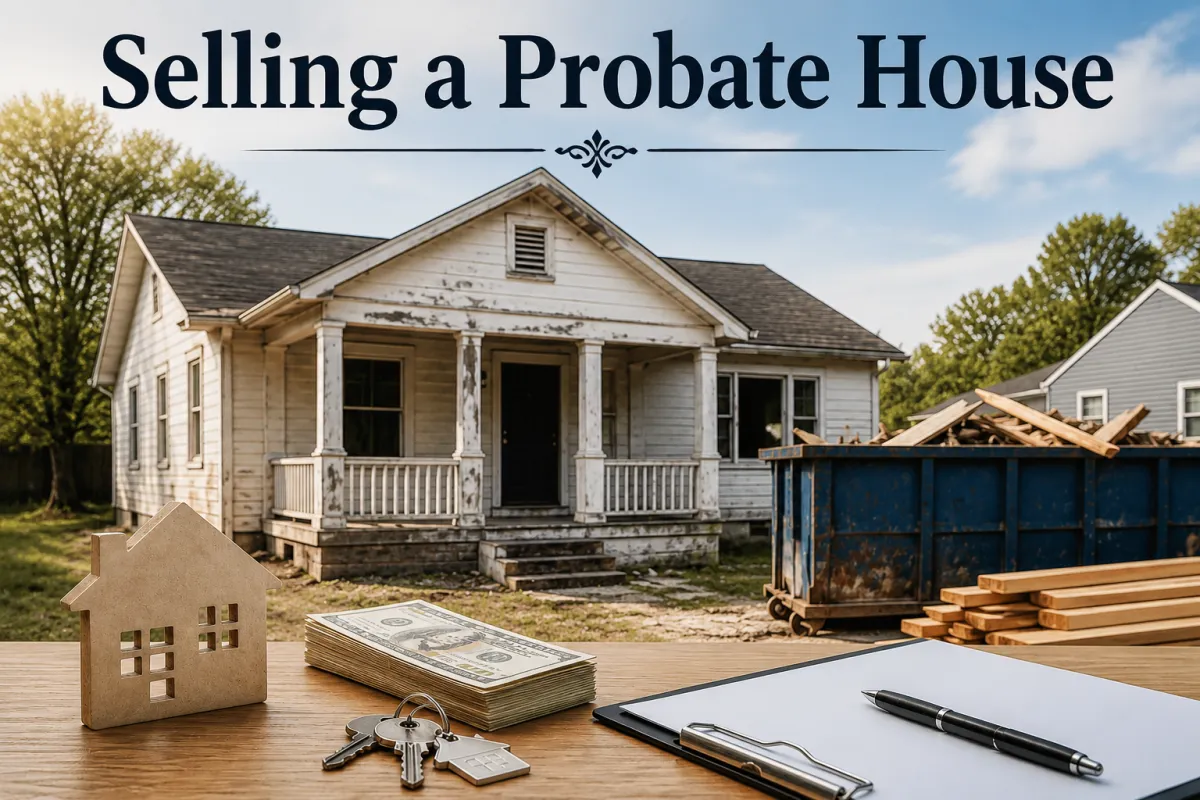
Selling a Probate House As-Is vs Making Repairs in Nebraska
Inheriting a house through probate in Nebraska creates one of the toughest financial questions an executor or heir will face: fix it up to chase a higher list price, or sell the house as-is and close fast? The wrong choice can cost the estate tens of thousands of dollars, delay closing by months, and expose the executor to liability the family never expected.
In Nebraska, selling a probate house as-is for cash is usually the better choice when the home needs more than $10,000 in repairs, sits vacant, has multiple heirs, or carries holding costs. Repairs only pay back when the home has minor cosmetic issues, the market is hot, and the executor has the time, cash, and unanimous heir approval to invest estate funds.
This guide breaks down the real numbers, the Nebraska-specific rules, and a decision framework you can use today.
What "Selling House As-Is" Actually Means in a Nebraska Probate
When you sell a house as-is in Nebraska, you're telling buyers: "What you see is what you get." The seller does not commission repairs, does not credit buyers for defects, and does not bring the home up to inspection-grade condition.
That doesn't mean you can hide problems. Nebraska law still requires sellers to complete the Seller Property Condition Disclosure Statement for known material defects, even in probate. There are limited exemptions for some probate sales, but disclosure obligations don't disappear simply because the house is being sold "as-is."
In a probate context, an as-is sale also has another meaning: the estate is not draining its limited cash reserves on contractor work that may never pay back at closing.
Who Decides Whether to Repair a Probate House in Nebraska?
The person legally authorized to make the call is usually the personal representative (Nebraska's term for the executor or administrator) appointed by the county probate court.
Their decisions, however, are bound by fiduciary duty to all heirs and creditors. That matters because:
Estate funds, not the executor's personal money, pay for repairs
Heirs can challenge spending decisions if repairs reduce their inheritance
Court approval may be needed for larger expenditures during formal probate
The personal representative can be held liable for losses caused by poor financial judgment
For estates under $50,000, Nebraska allows a simplified affidavit procedure after a 30-day waiting period. Anything above that threshold typically triggers formal probate, which means more documentation, court oversight, and timeline pressure.
The Real Cost of Selling a House in Nebraska (2026 Numbers)
Before comparing as-is to repairs, you need to know what selling actually costs in the current Nebraska market.
Selling a Probate House As-Is: Pros and Cons
Advantages
Faster closing: often 7 to 14 days with a verified cash buyer
No estate funds spent on repairs: protects the inheritance pool
Reduced executor liability: no risk of misjudging repair ROI
No staging, no showings, no open houses: practical for out-of-state heirs
Eliminates financing fall-through risk: no buyer mortgage = no appraisal failure
Solves multi-heir disputes faster: quicker proceeds distribution
Disadvantages
The sale price is typically below the retail market value
Not every cash buyer is a reputable vet thoroughly
Some homes (clean, updated, market-ready) genuinely do leave money on the table
Making Repairs Before Selling a Probate House: Pros and Cons
Advantages
Potential for a higher list price
May attract retail buyers using FHA/VA financing
Cosmetic upgrades sometimes yield 70–100% ROI
Disadvantages
Repair money comes from the estate (less inheritance distributed)
Probate timeline extends, carrying costs keep adding up
Contractors in Nebraska can be backlogged 4–12 weeks
Hidden defects (foundation, roof, electrical) often double initial repair estimates
All heirs may need to approve major expenditures
The executor carries personal risk if repairs don't pay back
Side-by-Side Net Proceeds Example (Nebraska, $300,000 Property)
Here's what the math actually looks like on an inherited Lincoln or Omaha-area home with deferred maintenance:
The result is uncomfortable for most heirs: after repairs, commissions, concessions, and four months of holding costs, the "higher list price" route often nets the estate roughly the same or less than a fast cash sale, with far more risk, time, and complexity.
When Repairs Actually Make Sense
There's no universal "always sell as-is" rule. Repairs can be the right move when all of the following are true:
The home needs only cosmetic fixes (paint, flooring, light fixtures, minor kitchen updates)
The total repair budget is under 10% of the expected sale price
The estate has cash reserves, no need to borrow
All heirs unanimously agree in writing
The home is in a fast-moving market with low days on the market
The executor has the time and bandwidth to manage contractors
There are no pressing creditor deadlines or tax bills
If even two or three of those conditions are missing, an as-is sale is almost always the safer financial decision.
When to Sell a Probate House As-Is in Nebraska (Decision Triggers)
Sell as-is for cash if any of these apply:
The home has been vacant for 60+ days
Repairs are estimated at over $15,000
There are structural, roof, mold, or foundation issues
The property has tenants, code violations, or liens
Heirs are spread across multiple states
A creditor or tax deadline is closing in
Heirs disagree about strategy and need a fast resolution
The executor has no contractor management experience
Nebraska-Specific Rules Every Executor Should Know
Documentary Stamp Tax (LB1067 Update)
Nebraska charges a documentary stamp tax of $2.32 per $1,000 of sale price (rising to $3.32 per $1,000 under LB1067, expected to take effect later in 2026). On a $300,000 sale, that's roughly $696–$996 paid at closing.
Step-Up in Basis (IRS Rule)
For inherited property, the IRS resets the cost basis to the fair market value on the date of death under Publication 559. That often means little to no capital gains tax if the estate sells shortly after inheriting a meaningful advantage that disappears the longer the home is held.
Disclosure Still Applies
Even in an as-is sale, Nebraska law requires sellers to disclose known material defects in writing. "As-is" reduces buyer remedy options it does not permit sellers to conceal known issues.
How to Avoid the 5 Most Common Mistakes
Spending estate cash on the wrong repairs, kitchens, and bathrooms has a higher ROI than roofs and HVAC at resale
Forgetting to obtain their consent in writing before any expenditure
Ignoring the holding cost meter, taxes, insurance, utilities, and lawn care silently bleed the estate every month
Choosing the highest offer instead of the strongest offer, a $310K offer with a financing contingency can fall through; a $290K cash offer will close
Skipping the executor's fiduciary checklist document for every decision in case heirs later question your judgment
Expert Insight: How Launch Homebuyers Handles Probate Sales
We've closed over 500 deals across Nebraska, including dozens of probate, inherited, and as-is properties. In our experience working with families in Omaha, Lincoln, Grand Island, Kearney, and beyond, the difference between a clean probate close and a stalled one usually comes down to two things: confirming legal authority early, and being honest about repair ROI.
When you work with us on a probate property, you get:
A no-obligation cash offer within 24 hours
A purchase with zero repairs required
A flexible closing date as fast as 7 days, or whenever works for your timeline
We pay 100% of standard closing costs
We coordinate directly with your probate attorney to keep the file moving
Final Thoughts
For most Nebraska families navigating probate, the math is clearer than it feels in the moment. Once you account for commissions, repair costs, holding costs, executor risk, and the new 2026 documentary stamp tax, selling the probate house as-is for cash typically nets the estate as much money and a much faster, cleaner resolution.
Repairs are not free. They cost the estate cash, time, and certainty. Before you call a contractor, run the as-is comparison first.
If you're an executor or heir trying to settle a Nebraska probate house quickly, request a no-pressure cash offer from Launch Homebuyers and see exactly what the property could close for in its current condition.
FAQ
Can you sell a probate house as-is in Nebraska?
Yes. Once the personal representative has court authority, a probate house in Nebraska can be sold as-is. Buyers accept the property in its current condition, and the estate avoids spending limited funds on repairs before closing.
How much do you lose selling a house as-is in Nebraska?
Most as-is cash sales close at roughly 70–85% of full retail market value. After commissions, repairs, concessions, and holding costs are deducted, the actual net difference often shrinks to a small percentage, sometimes none at all.
Do all heirs have to agree to sell a probate house as-is?
In most Nebraska cases, yes. If the property is part of the estate or owned jointly by multiple heirs, sale proceeds and decisions usually require agreement among the beneficiaries or formal authority granted to the personal representative.
Who pays for repairs on a probate house in Nebraska?
The estate generally pays for any repairs, not the executor personally or the heirs individually. That money comes directly out of the inheritance pool, which is why overspending on repairs can create lasting friction between heirs.
How fast can you sell a probate house as-is for cash?
If legal authority and a clean title are in place, a cash sale on a Nebraska probate house can often close in 7 to 14 days. Probate court timelines, creditor notices, or unresolved title issues may extend that window.