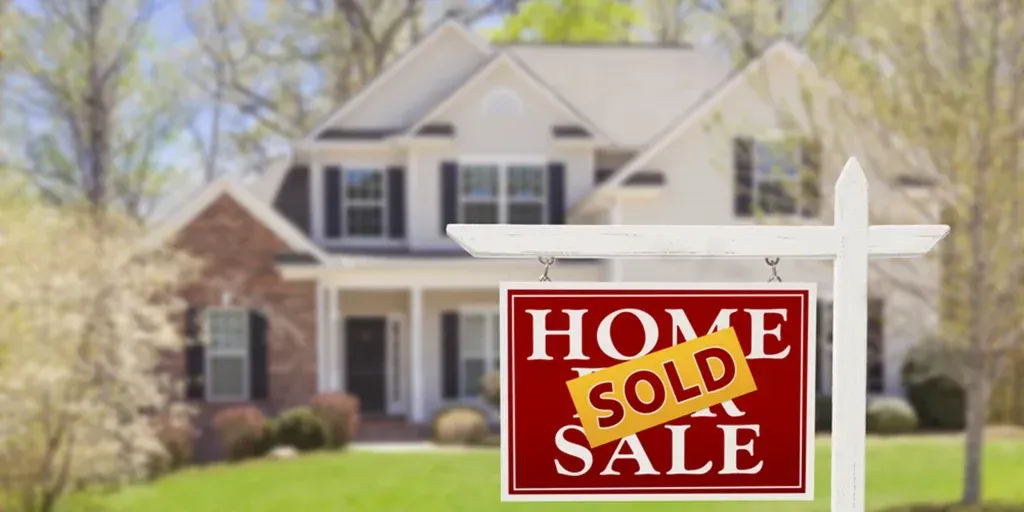
How to Sell House Fast: 12 Proven Strategies That Work in 2026
If you've been Googling "how to sell house fast" at midnight, you already know the market isn't what it was in 2022.
Here’s the short answer:
The fastest ways to sell a house in 2026 are:
Price it correctly from day one
Use time-bound showing windows to create urgency
Sell to a cash buyer for a 7–14 day close
Position the home for a specific buyer niche
Here's the reality check: according to Redfin's February 2026 data, the median days on market in the U.S. is now 66 days, and that's before you add the 30–45 days it takes to actually close. The frantic weekend bidding wars are behind us. But that doesn't mean you're stuck. It means you have to be smarter.
Here's what most sellers get wrong: they treat the 2026 market like it's still 2021. It isn't. PBS NewsHour reported that 2025 home sales finished at their lowest pace since 1995, two consecutive years of historically suppressed volume. That's not doom and gloom; it's context. It means the sellers who move their homes fast are doing something deliberate and different.
Let's get into what actually works.
The 8 Strategies That Actually Move Homes in 2026
1. Use "Micro-Upgrades" Instead of Full Renovations
Full kitchen remodels don't recoup their cost in most markets right now. What does work: targeted, high-visibility improvements that photograph well and signal "move-in ready" to a scrolling buyer.
Think smart lock on the front door ($200), updated light fixtures in the main living areas ($150 each), a fresh coat of paint in a neutral warm-white, and an outdoor seating arrangement that makes the backyard feel like a lifestyle rather than a patch of grass. These micro-upgrades cost under $2,000 total and can meaningfully lift your perceived value.
Marije Kruythoff, a Redfin Premier agent in Los Angeles, put it plainly: “homes that are pretty nice but not updated sit longest on the market.” The goal isn't perfection, it's removing buyer objections before they form.
2. Turn Staging Into "Lifestyle Packaging"
Traditional staging is furniture arrangement. Lifestyle packaging is telling a story. Before you list, decide who your most likely buyer is:
Remote worker household? Set up a dedicated home office corner with good lighting, a clean desk, and fast-router placement visible.
Young family? Stage the backyard as a play-friendly space. Make the mudroom functional and photo-ready.
Investment buyer? Leave the home neutral and include a one-pager on rental comps in the area.
The buyer persona shapes every decision, from which rooms you photograph first to how you write the listing description. A home staged for a specific lifestyle closes faster because it creates immediate emotional identification. The buyer stops browsing and starts imagining.
3. Create AI-Personalized Listing Versions
One generic MLS description is table stakes. In 2026, savvy sellers (and their agents) are creating two or three distinct listing narratives for different distribution channels and buyer profiles.
Version A: "Ideal for the remote professional, dedicated office, fast-fiber neighborhood, quiet street."
Version B: "Multi-generational living ready, two living areas, separate entrance, flexible floor plan."
Version C: "Investor alert, located in a high-demand rental zip, turnkey condition."
These aren't different listings. They're different angles on the same property, distributed to the right audience on the right platform: Facebook groups for local investors, LinkedIn for relocating professionals, Instagram Reels for lifestyle buyers.
4. Market the Home as a Niche Product
The average home listing tries to appeal to everyone and ends up resonating with no one. In a market with 1.73 million homes for sale nationally, generic doesn't cut it.
Ask yourself: what is this home actually perfect for? A detached garage becomes "ideal for the hobbyist or home business." Proximity to a major highway becomes "commuter-friendly." An open floor plan becomes "Airbnb-ready layout." Naming your niche doesn't limit your buyer pool, it magnetizes the right buyers who self-select fast and make strong offers.
5. Offer Pre-Built Buyer Incentives Upfront
In 2026, with mortgage rates still hovering near 6–6.5% and buyers acutely sensitive to monthly costs, closing cost contributions and rate buydowns are not perks, they're conversion tools. But here's the mistake: most sellers wait to offer these as negotiation chips after a buyer raises the issue.
Flip that. Put the incentive in the listing itself: "Seller to contribute $8,000 toward buyer closing costs" or "Refrigerator, washer/dryer included." This reduces buyer hesitation at the top of the funnel, the moment they're deciding whether to click your listing at all. A buyer who sees a tangible financial benefit in line one doesn't need convincing later.
6. Launch With a Time-Bound Selling Window
This is a strategy borrowed from product launches, and it works in real estate. Instead of going live and waiting, you build anticipation:
List the property as "coming soon" for 5–7 days with teaser photos
Host a 48-hour or weekend-only open house event
Set an offer review deadline: "All offers reviewed Sunday at 6 PM"
This creates legitimate urgency and, in competitive situations, triggers multiple-offer dynamics even in slower markets. Buyers who know an offer deadline exists are less likely to sleep on it. This is the same psychology behind flash sales, scarcity of time is a more powerful motivator than scarcity of inventory.
7. Sell a "Ready-to-Live" Experience
The most friction a buyer feels is the mental math of moving: "What do I need to buy? What needs fixing? When can we actually live here?" The seller who eliminates that friction wins.
A "ready-to-live" package might include: all appliances staying, a smart home system already installed and transferred, a home warranty for one year paid by the seller, and even a prepaid internet setup. Some sellers in high-competition markets are including a home cleaning service for the first month or a lawn care subscription for one season.
The cost is modest. The signal is powerful: this home is done. You can move in Thursday.
8. Use Short-Form Video Storytelling
Photos show what a home looks like. Video shows what it feels like to live there. That gap is where homes get sold in 2026.
A 60-second Reel walking through the home in morning light, coffee maker going, backyard visible, neighborhood sounds, converts browsers into visitors. According to the National Association of Realtors, listings with video receive significantly more inquiries than those with photos alone. Yet the overwhelming majority of listings still use only static photos.
Your video doesn't need a production budget. A steady-handed smartphone walk-through with natural light, shot in two takes, posted to Instagram Reels, TikTok, and YouTube Shorts costs nothing and reaches the exact demographic millennials and younger Gen X buyers who are actively searching for homes right now.
A Note on Timing and the "Average Time to Sell a House by Zip Code" Question
People often search for the average time to sell a house by zip code because they want a local benchmark. The honest answer: it varies wildly. Hartford, CT homes are going under contract in 7 days. Austin, TX homes are sitting 100+ days. Your zip code is not your destiny, but it is your baseline.
What you can control: your pricing, your presentation, your positioning, and your response speed during negotiations. Sellers who move fast in slow markets share one trait, they remove buyer friction at every step.
FAQ: Fast Answers for Common Seller Questions
What's the single fastest way to sell my house?
Selling to a cash buyer, you can have an offer in 24 hours and close in 7–14 days, with no repairs, no showings, and no financing contingencies.
Does "fast sell my house" mean I lose money?
Not necessarily. A correctly priced home on a well-executed 48-hour launch window often sells at or above list price. Speed and price aren't always in conflict.
How does the average time to sell a house compare in 2026 vs. 2024?
Slightly slower. The median days on market nationally is about 66 days in early 2026, up from around 57 days two years ago. Inventory is rising, giving buyers more options and time.
What's the best month to list if I want to sell fast?
May and June consistently show the shortest days on market and highest sale-to-list ratios, according to Redfin data across multiple years.
Can house selling tips from a realtor actually move the needle?
Pennie Carroll, a top Des Moines agent, says sellers often waste time on unnecessary improvements. "The process starts with the agent telling you what needs to be done, and what doesn't," she told HomeLight. That clarity alone can shave weeks off your timeline.
What about selling in a market like Los Angeles does "sell my house fast Los Angeles" need a different approach?
LA is hyper-local. A home in Silver Lake and one in Palmdale operate in functionally different markets. Lifestyle packaging (Strategy 2) and niche positioning (Strategy 4) are especially high-value in LA because buyer personas vary so dramatically by neighborhood.
What if my house needs repairs I can't afford?
Sell as-is to a direct cash buyer. You skip repairs, skip showings, and close on your timeline. It's the cleanest exit when the traditional market isn't realistic for your situation.
When You Want to Skip All of This
Look, these strategies work. But they also require time, coordination, an agent you trust, and a property that's ready to perform. Not every seller is in that position.
Divorce. Job relocation. Inherited property. Behind on payments. Landlord exhaustion. For those situations, the traditional listing process adds stress, cost, and uncertainty that most people can't absorb.
That's exactly where Launch Homebuyers comes in. They're a Nebraska-based cash home buying company that makes an offer within 24 hours, buys homes as-is, no repairs, no cleaning, no staging, and closes on your timeline, sometimes in as little as a week. No agent commissions, no open houses, no wondering if the deal will fall through at the last minute.
If you've tried the tips and the home isn't moving, or if you simply want the certainty of a clean, fast close, getting a no-obligation cash offer from Launch Homebuyers costs nothing and takes minutes. Many Nebraska sellers who initially planned to list traditionally end up choosing the cash route once they see how straightforward the process actually is.
The Bottom Line
Selling fast in 2026 isn't about luck or a hot market. It's about understanding what today's buyer wants, certainty, a turnkey experience, and a home that speaks directly to their lifestyle, and then delivering exactly that. Use micro-upgrades, not full renovations. Package a lifestyle, not just a floorplan. Create urgency with a time-bound launch. Use video to close the emotional gap that photos leave open.
And if the traditional path isn't working, or you'd rather skip it entirely, a hassle-free process like the one offered at Launch Homebuyers exists specifically for that moment. No pressure, no commissions, no 66-day wait. Just a fair cash offer and a closing date that works for you.